This appendix puts the structures from Minor Alkaloids and Morphine vs. Mitragyna Alkaloids side by side. It maps molecular relationships. Receptor assays and human studies answer different questions from a structure drawing.
Reading the diagrams
In a skeletal formula, each unlabeled corner is a carbon atom and most carbon-bound hydrogen atoms are omitted. Solid and hashed wedges show bonds that project out of or behind the page. Those wedges matter here: several kratom alkaloids have the same atoms and bond connections but differ in the three-dimensional arrangement at one carbon.
A flat drawing cannot show the range of shapes a molecule adopts in solution, prove how it binds a receptor, or predict a dose. The captions below identify the structural change and summarize the assay result needed to place it in context.
Kratom leaf alkaloids
Researchers have isolated mitragynine alongside related indole and oxindole alkaloids from kratom leaf and confirmed their structures with NMR and mass spectrometry (Flores-Bocanegra et al., 2020). Speciogynine and speciociliatine share mitragynine’s formula and bond connections. Speciogynine reverses the arrangement at C-20; speciociliatine reverses it at C-3. Paynantheine has an ethenyl group at C-20 in place of mitragynine’s ethyl group.
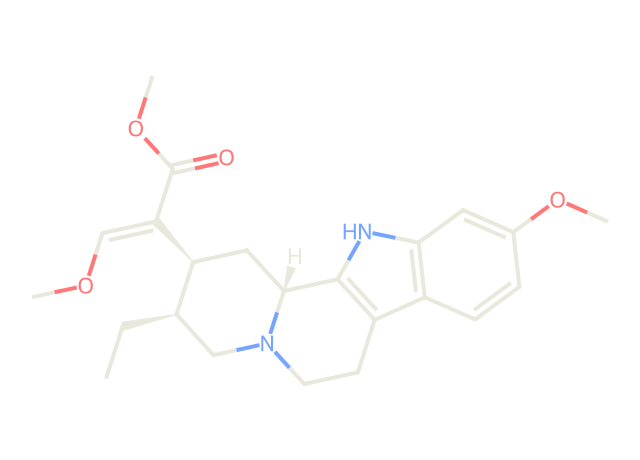
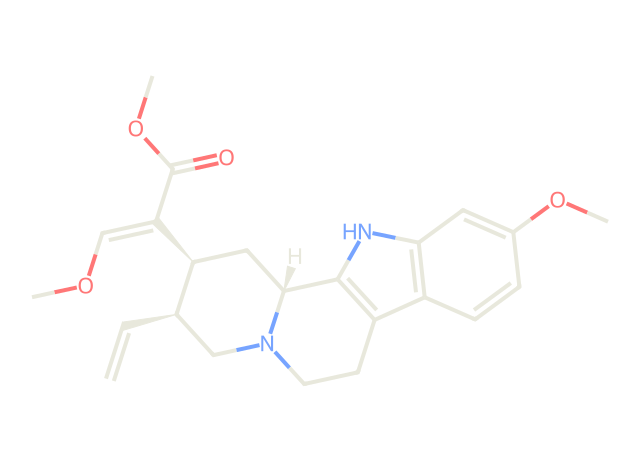
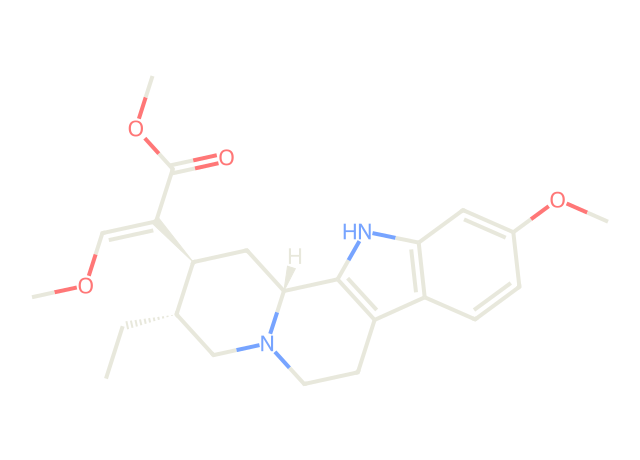
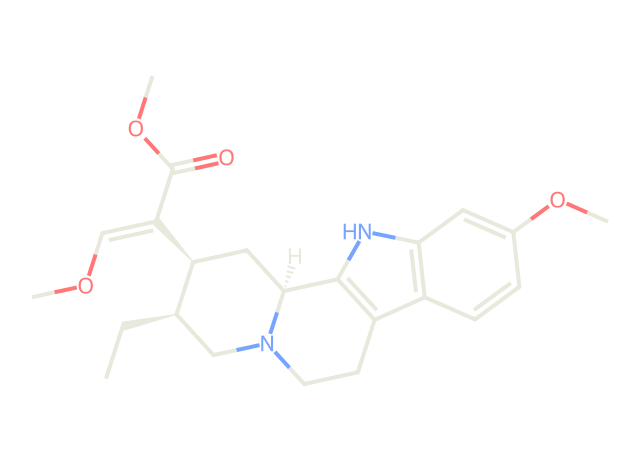
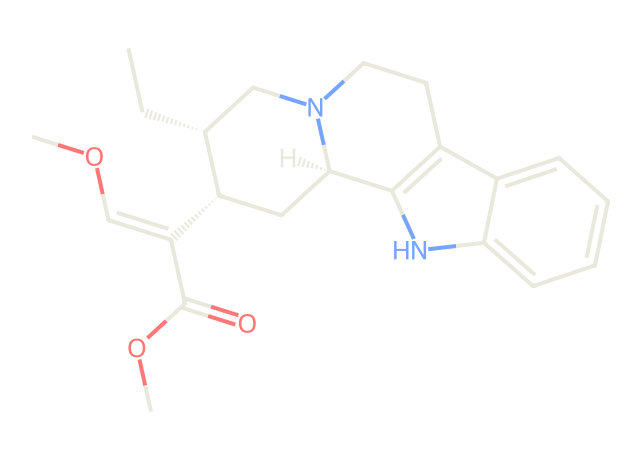
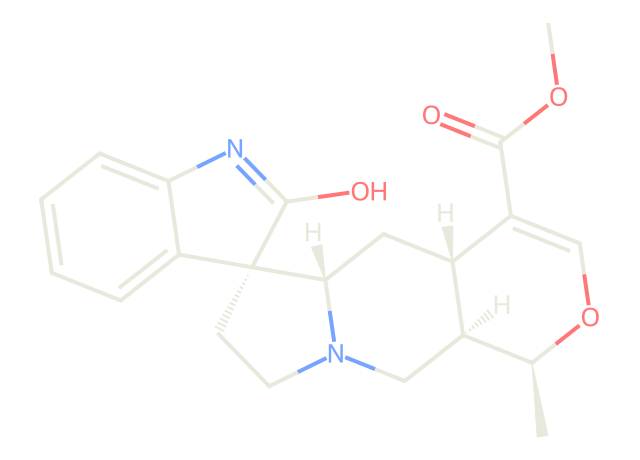
The epimers show why a name such as “minor alkaloid” says little about receptor activity. In one set of assays run across the same human receptors and cell systems, hMOR binding affinity (Ki) was 238 nM for mitragynine, 472 nM for speciogynine, and 49 nM for speciociliatine. Mitraphylline had no measurable hMOR, hKOR, or hDOR binding at the concentrations tested (Hemby et al., 2026). These are laboratory binding results, not human potency rankings.
Paynantheine and speciogynine bind 5-HT₁ₐ receptors, but their parent compounds did not activate the canonical G-protein pathway in that study; metabolites may account for some animal results (León et al., 2021). Corynantheidine showed α₁D-adrenergic affinity in another receptor panel (Obeng et al., 2020). Species, receptor preparation, cell system, and measured pathway can change the result.
Metabolites and semi-synthetic derivatives
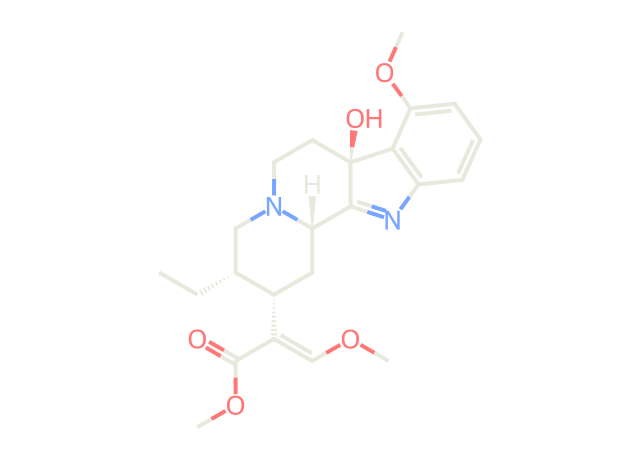
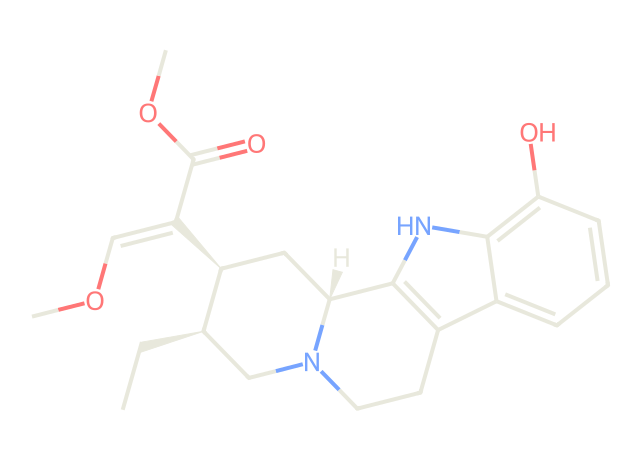
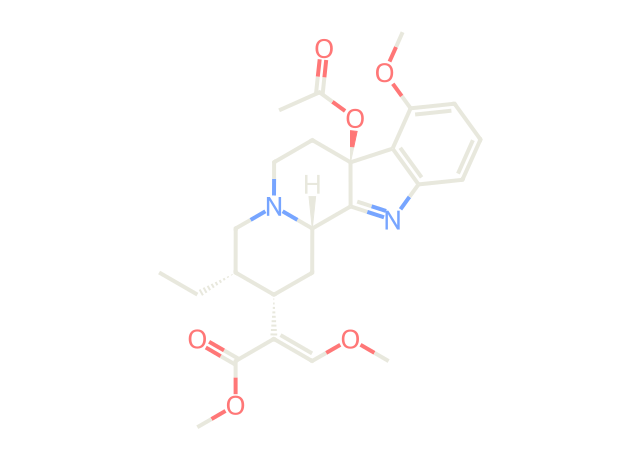
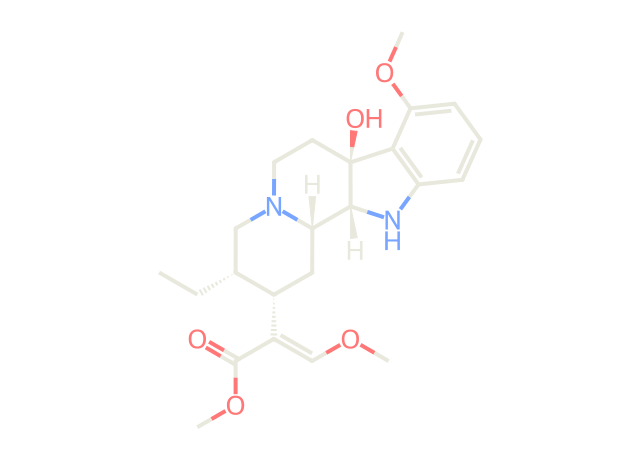
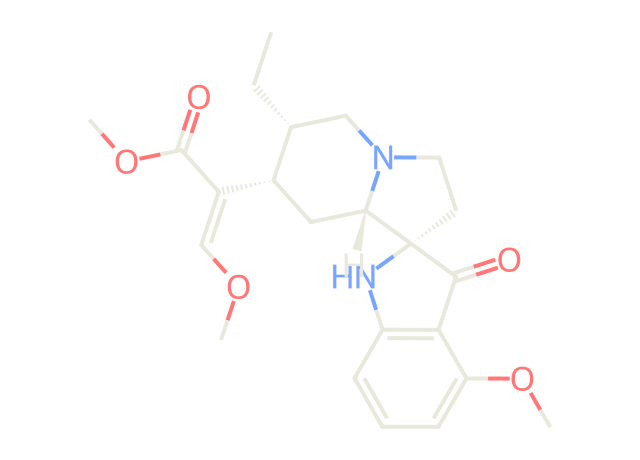
The compounds below share the mitragynine scaffold. Metabolism forms 7-hydroxymitragynine and mitragynine pseudoindoxyl. Chemical modification produces MGM-15 and 7-acetoxymitragynine. Product labels cannot establish a compound’s identity, concentration, or contaminant profile.
Oxidation at C-7
Oxidation converts mitragynine’s indole region into the C-7 hydroxyindolenine found in 7-OH. In the uniform 2026 human-receptor panel, 7-OH had about 16-fold higher hMOR binding affinity than mitragynine (15.1 nM versus 238 nM). A docking model placed the added hydroxyl near Asn124, where it could add a hydrogen-bond contact (Hemby et al., 2026). That proposed contact comes from a computer model, not a solved 7-OH–receptor structure.
9-Hydroxycorynantheidine is a different oxidation product: its hydroxyl replaces mitragynine’s C-9 methoxy group, leaving a phenol. Researchers have detected it in mitragynine metabolism studies and reported partial µ-opioid agonism in guinea-pig ileum tissue (Chakraborty et al., 2021; Matsumoto et al., 2005). That tissue result does not establish its contribution to human kratom effects.
7-Acetoxymitragynine carries an acetate ester at the same C-7 oxygen shown as a hydroxyl in 7-OH. The available structure and the 2002 medicinal-chemistry paper establish the compound’s identity, but the sources cited here do not establish its absorption, ester cleavage, half-life, or role as a 7-OH prodrug in humans (Takayama et al., 2002).
Reduction to MGM-15
MGM-15 retains the C-7 hydroxyl and adds two hydrogen atoms across the N1–C2 bond, converting the indolenine region to an indoline. In guinea-pig brain membranes, the compound bound µ- and δ-opioid receptors with Ki values of 6.4 nM and 16 nM (Matsumoto et al., 2014). Those preclinical values do not supply a human dose, duration, safety profile, or claim that MGM-15 is the strongest compound in a retail product. See MGM-15 for the product-focused evidence limits.
Rearrangement to mitragynine pseudoindoxyl
Mitragynine pseudoindoxyl rearranges the indole core into a spiro-pseudoindoxyl with a carbonyl group. Metabolism studies in mice and human liver preparations have found this product after mitragynine exposure (Chakraborty et al., 2021). In water and other protic environments, it forms a changing ensemble of stereoisomers, so the diagram above is one member rather than a complete account of the material in solution (Angyal et al., 2023). Human pharmacokinetic data remain sparse.
Reference structure
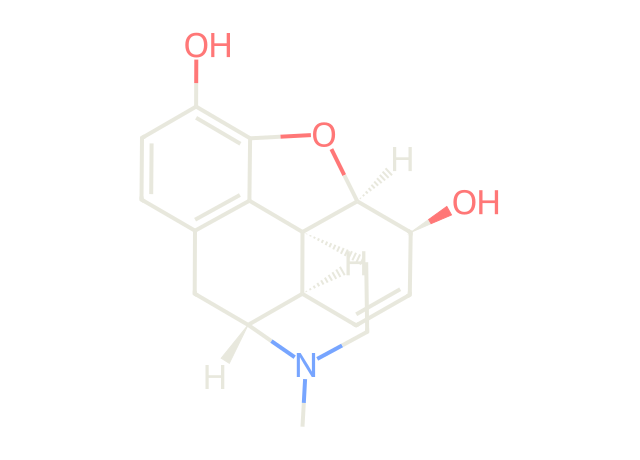
Morphine is not a mitragynine derivative and does not share its monoterpenoid indole scaffold. It is a morphinan alkaloid (PubChem CID 5288826). Both compound families can engage µ-opioid receptors, but that common target does not make their structures or full pharmacology interchangeable. See Morphine vs. Mitragyna Alkaloids for the assay comparison and its limits.
Diagram limits. A structure identifies an arrangement of atoms. It cannot confirm what is in a tablet, establish concentration or purity, reveal undeclared compounds, or turn a receptor result into dosing advice.
Sources and structure records
- Hemby et al. (2026), uniform human opioid-receptor assays and docking
- Flores-Bocanegra et al. (2020), isolation and structural characterization of kratom alkaloids
- León et al. (2021), serotonin-receptor pharmacology of paynantheine, speciogynine, and metabolites
- Obeng et al. (2020), opioid and adrenergic receptor binding
- Chakraborty et al. (2021), mitragynine metabolism in mice and human liver preparations
- Matsumoto et al. (2005), 9-hydroxycorynantheidine tissue pharmacology
- Takayama et al. (2002), mitragynine structure–activity work
- Matsumoto et al. (2014), MGM-15 structure and preclinical pharmacology
- Angyal et al. (2023), stereochemical behavior of mitragynine pseudoindoxyl
- Authoritative structure records: mitragynine, paynantheine, speciogynine, speciociliatine, corynantheidine, 7-hydroxymitragynine, 9-hydroxycorynantheidine, 7-acetoxymitragynine, MGM-15, mitragynine pseudoindoxyl, and mitraphylline
Related pages
- Minor Alkaloids: receptor data for leaf alkaloids across opioid, serotonin, and adrenergic systems
- Morphine vs. Mitragyna Alkaloids: a comparison of receptor assays and structural families
- Compounds: the evidence and harm-reduction overview for each named compound